

Home › Everything under one roof › Birth control › IUD contraception
IUD or Implanon insertion
If you have just given birth and would like a reliable form of contraception, both the IUD and Implanon are good and responsible choices. We thought it would be nice if you could also turn to your trusted midwife for this aspect of women’s healthcare. After all, she knows exactly how your pregnancy, delivery, and postpartum period went and can tailor her approach accordingly.
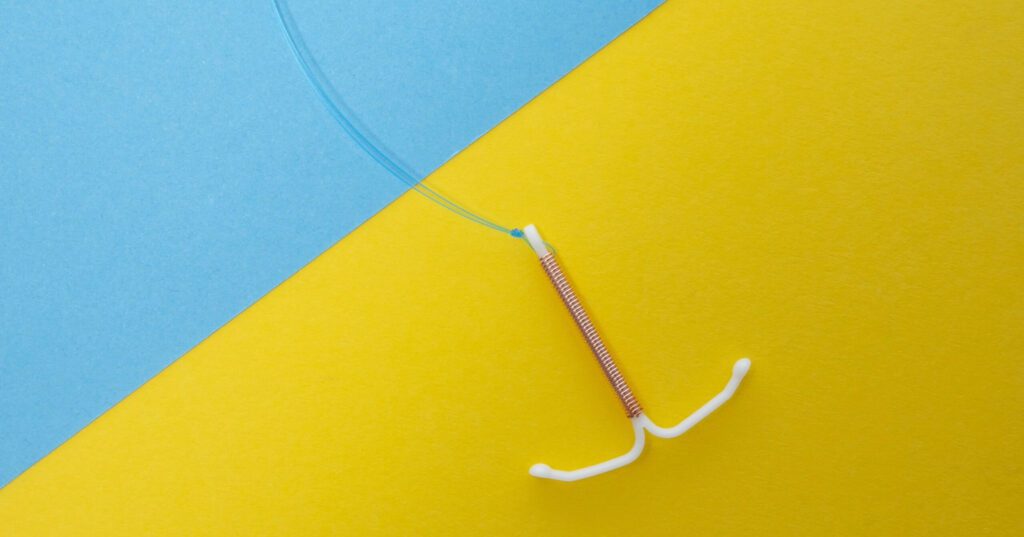
Wich IUD suits me?
You can make a distinction between a hormonal IUD (such as the Mirena or Kyleena) and a copper IUD (such as the T-Safe).
All IUDs are compatible with breastfeeding.
The Mirena® IUD is a hormone-releasing IUD that is reliable for 5 years. When using the Mirena®, you often experience irregular periods during the first 3 to 6 months. After that, your menstrual pattern may change, or your period may completely stop. The cost is approximately €150. If the Mirena® IUD is inserted during your period—or at least within 7 days after the start of your period—you are immediately protected against pregnancy after insertion. If the Mirena® IUD is not inserted during your period, you will need to use additional contraception for the first 7 days after insertion.
The Kyleena® IUD is also a hormone-releasing IUD that is reliable for 5 years. It is slightly smaller than the Mirena® IUD and contains fewer hormones. The mechanism of action is otherwise the same as the Mirena® IUD. The cost is approximately €150,-.
The T-Safe® copper IUD contains no hormones and is the only IUD that is reliable for 10 years. You will retain your normal menstrual cycle, although in some cases it may become slightly heavier. According to the Dutch College of General Practitioners (NHG), this is the copper IUD with the highest reliability. The chance of pregnancy is almost nonexistent. The cost is approximately €70. A copper IUD is immediately effective as contraception after insertion.
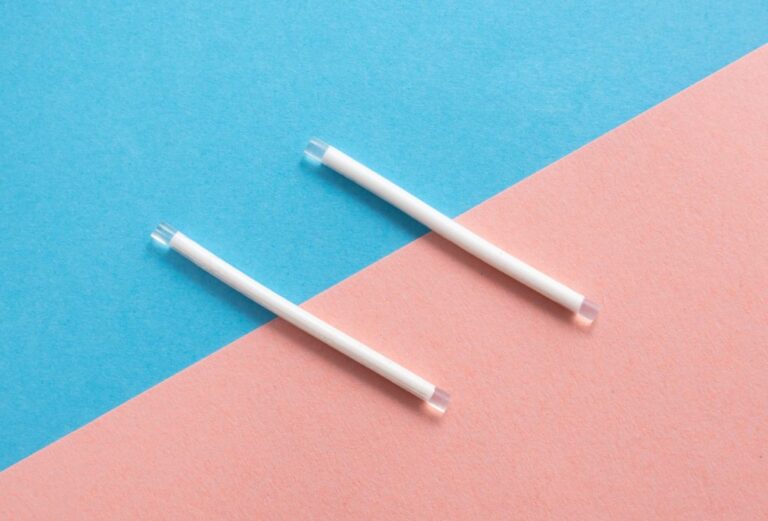
Implanon NXT
The Implanon NXT is a small rod that is placed in your arm and provides protection against pregnancy for three years. It gradually releases the hormone etonogestrel (a progestin) into your bloodstream.
The Implanon NXT is also compatible with breastfeeding.
The costs of placement
The insertion of an IUD or Implanon is covered by most health insurers under the basic insurance package.
Sometimes, it may be deducted from your own deductible.
Please check your policy terms for more details
The costs of the IUD
You usually pay these costs yourself, or through your supplementary health insurance, and they depend on which contraceptive method you choose.
How does it work?
Please note: Do not open the package!
Before the IUD is inserted, you must be sure that you do not have an STI (sexually transmitted infection) or are pregnant. If you’re unsure, get tested. (Some STIs, such as Chlamydia or Gonorrhea, can be carried without you experiencing any symptoms. Inserting an IUD can cause an unnoticed STI to move into your uterus and fallopian tubes, which can have serious consequences for your fertility.)
It is recommended to take 400 mg ibuprofen or 1000 mg paracetamol 1 hour before the appointment.
The appointment will take about 20 minutes in total, but the insertion of the IUD or Implanon is usually done within a few minutes.
If you’re getting an IUD inserted: Make sure to use the restroom before your appointment, as an empty bladder is more comfortable during the procedure.
In rare cases, it may turn out that the IUD insertion is not possible. This is usually discovered when measuring the uterus. A new attempt may be needed, or we may refer you to a gynecologist.
If you’ve had an IUD inserted, take it easy for the rest of the day, as you may feel a bit dizzy. It’s normal to experience abdominal cramps or a dull feeling in your lower abdomen after the procedure. This usually lasts for a short time.
Six weeks after the insertion, you will have a follow-up appointment to check if the IUD or Implanon is still in place.
Any known side effects?
The chance of side effects is relatively small. We kindly refer you to the leaflet of your chosen IUD for specific information.
Meer informatie over anticonceptie
Removing IUD or Implanon NXT
Of course, you can also come to us for the removal of your IUD or Implanon NXT.
An IUD needs to be replaced or removed every 5-10 years, and the Implanon NXT after 3 years. This can also be done earlier, for example, if you want to have children or if you want to switch to another form of contraception.
After the removal of the IUD or Implanon NXT, you will be immediately fertile again.